If your perfect San Francisco day starts with a bayfront run and ends with dinner on a lively, walkable street, the Marina might feel like home. You want easy access to parks and water views, plus real options for single-family homes, flats, and condos. In this guide, you’ll learn how daily life actually works here, what housing types you will find, what current prices and rents look like, and the key due‑diligence items to check before you buy or rent. Let’s dive in.
Marina at a glance
The Marina District lines San Francisco’s northern waterfront in ZIP 94123. Much of the neighborhood sits on land redeveloped after the 1915 Panama‑Pacific International Exposition, with the Palace of Fine Arts as the iconic remnant of that era. For a quick history refresher, see the overview of the neighborhood’s origin and the fair’s legacy on the Marina District, San Francisco page.
Day to day, you experience a flat, sun‑favored area with frequent bay views and a strong culture of walking, running, and cycling. Small commercial corridors anchor errands and social time. The Compass neighborhood guide captures that outdoor‑oriented lifestyle that many residents value.
Chestnut Street rhythm
Chestnut Street is the Marina’s main stage. You will find cafés, boutiques, a neighborhood grocery, and a rotating set of casual restaurants and bars clustered within a compact set of blocks. Most new residents use Chestnut for everyday shopping, coffee, and quick dinners.
The lineup of tenants changes over time, which is common for active neighborhood corridors. For example, recent coverage noted a Madewell opening on Chestnut in 2025, alongside other comings and goings on the street. That kind of turnover reflects a healthy, evolving retail mix on a corridor with steady foot traffic. You can read more in this San Francisco Chronicle report on Chestnut Street retail changes.
On weekdays, expect an early rhythm of joggers, dog walkers, and commuters. Weekends bring bigger crowds to Chestnut’s restaurants and to the waterfront, especially on clear afternoons. The Marina’s flat terrain reinforces short, car‑free trips for errands and workouts.
Waterfront, parks, and recreation
Living here places San Francisco’s best bayfront spaces in your daily routine:
- Crissy Field: restored tidal marsh, long paved promenade, and beach access
- Marina Green: a wide open lawn along the harbor
- Fort Mason: events and markets with a short stroll from the water’s edge
- Palace of Fine Arts: landmark grounds and theater that feel like an urban oasis
These are the places you will use for runs, picnics, and views. The National Park Service highlights year‑round programming and activities in the Golden Gate National Recreation Area; explore a sampling on this NPS overview of park programming and media.
Sailing and boating are part of the neighborhood’s visual character. The St. Francis Yacht Club and other clubs front the harbor, supporting an active sailing scene on the city front. See the setting on the St. Francis Yacht Club listing page.
Housing styles and options
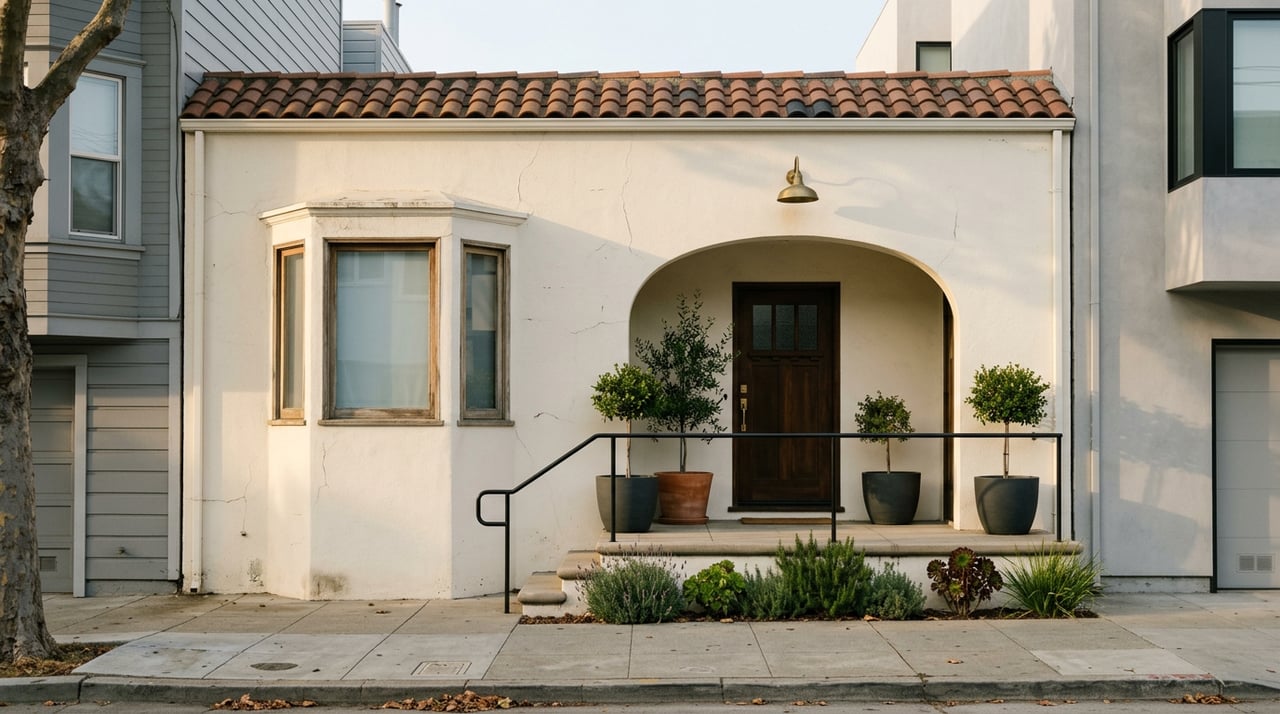
The Marina looks different from many classic San Francisco districts. Instead of long Victorian rows, you see Spanish and Mediterranean‑influenced façades, tiled or low‑pitched roofs, and arched details, along with Art Deco and 1920s–1930s low‑rise buildings. You also find multi‑unit flats and a range of condos. The Compass Marina guide offers a helpful snapshot of these styles.
Single‑family homes
Single‑family supply is limited and often dates to the 1920s–1930s, with many homes thoughtfully renovated. Larger bayfront properties on Marina Boulevard sit at the top of the price range and command premiums for views and frontage. If a house is your goal, plan for a competitive search and careful review of building systems and any past upgrades.
Flats and walk‑ups
Two‑ and three‑story flats are common. Many were built for multiple households and later converted to condos, while others remain as rental flats. These buildings often have period details and vary widely by parking, storage, and whether major work like soft‑story retrofits or foundation upgrades has been completed.
Condos and TICs
You will see a mix of purpose‑built condos and conversions. Unit size and amenity packages run the gamut from cozy one‑bedrooms to larger multi‑bedroom layouts. Parking can be a defining value driver, whether it is deeded garage space or a shared arrangement. In select buildings, you may also encounter TICs (tenancies‑in‑common), which have different financing and HOA structures than standard condos.
Parking and storage
Many older buildings were not designed with modern parking demand in mind. Deeded or assigned stalls add measurable value, and street parking rules can shape your daily routine. Always confirm parking status, storage availability, and Residential Permit Parking requirements on a case‑by‑case basis.
Prices and rents today
- Sales: Redfin’s snapshot for ZIP 94123 showed a median sale price of about 2.375 million dollars in January 2026. Micro‑locations matter a lot here, so interior blocks and bayfront addresses can look very different on a price‑per‑square‑foot basis. Ask your agent to pull recent, block‑level comps that mirror your target property type.
- Rents: According to Zumper’s Marina report, the median rent was 3,200 dollars for all beds in February 2026. Different rental platforms use different samples and listing types, so expect variation month to month. Furnished units, short‑term inventory, and small sample sizes can skew figures.
What this means for you: if you are buying, set search criteria by product type first, then compare recent comps within two to four blocks when possible. If you are renting, decide early whether you need on‑site parking and in‑unit laundry, then track a few comparable listings for two to three weeks to understand the true market.
Getting around
Public transit is straightforward for downtown access. The 30 Stockton and its peak‑hour express, the 30X, run north–south and connect you to key downtown hubs. For route details and history, see the Muni 30 Stockton overview.
There is no BART station within the Marina. Most riders connect to BART via Muni or use rideshare for Peninsula and East Bay trips. Drivers reach the North Bay quickly via US‑101 and the Golden Gate Bridge, while Peninsula commutes typically follow US‑101 south. Travel times are traffic‑dependent, so test your route during the hours you plan to travel.
Parking varies by block and building. If a unit lacks a private stall, confirm local Residential Permit Parking rules and typical guest parking before you sign or write an offer.
Key due diligence: what to check
Because much of the Marina was built on hydraulic fill, you should work through a focused checklist before you buy or rent. This is about safety, long‑term costs, and peace of mind.
Seismic and ground conditions
- The Marina experienced widespread liquefaction and ground failure during the 1989 Loma Prieta earthquake. USGS identifies parts of the area as having elevated liquefaction susceptibility due to historic fill. Read the background in this USGS overview of earthquake hazards and liquefaction.
- Ask about foundation type and condition, settlement history, and any structural upgrades. Request permits and final inspection records for completed work.
Soft‑story retrofits and building safety
- San Francisco’s mandatory soft‑story ordinance applies to many older wood‑frame multiunit buildings. Confirm whether required retrofits were completed and permitted, and whether any remaining work is planned. For a clear explanation of the program and its goals, see this engineering summary of San Francisco’s soft‑story ordinance.
Flooding and sea‑level rise
- Parts of the waterfront are low‑lying. Check FEMA’s Flood Map Service Center and regional sea‑level tools to see both current and future scenarios that could affect insurance or long‑term affordability. Start with the SFEI Data Center and this pointer to the FEMA Flood Map Service Center.
- Pay extra attention to units at or below grade. Ask about flood history, sump pumps, and drainage improvements.
Insurance, HOAs, and reserves
- For condos and TICs, request the latest reserve study and capital plan. Review how the building plans to fund seismic, facade, and roof projects.
- Ask whether flood insurance is required and whether any sea‑level‑rise mitigation has been discussed by the HOA.
Quick checklist before you commit
Use this list when touring or reviewing disclosures:
- Is parking included, and is it deeded or assigned? What is typical guest parking on your block?
- Has the building been seismically retrofitted, including soft‑story or foundation work? Request permits and final inspection records.
- Does the HOA have an up‑to‑date reserve study and documented capital plan?
- What is the unit’s grade level, and do FEMA/SFEI tools show current or future flood exposure?
- For renters: confirm lease language about repairs related to water intrusion, mold, and seismic damage, and ask whether required building permits have been completed.
Is the Marina a fit for you?
Choose the Marina if you value short, car‑free trips for coffee, errands, and waterfront workouts. You will trade some transit complexity for exceptional park access, flat streets, and frequent bay views. If you want a single‑family home within a compact, walkable area, the Marina’s Spanish and Mediterranean streetscapes may check that box, though inventory is limited. If you prefer a lower‑maintenance setup, flats and condos offer variety across size, finish level, and parking.
How to shop smarter here
- Define your must‑haves early. Parking, in‑unit laundry, and storage can be make‑or‑break features in this neighborhood.
- Focus by product type and micro‑location. A condo on an interior block will price differently than a bayfront home, even within a few minutes’ walk.
- For buyers, get comfortable with the disclosures. Foundation retrofits, settlement notes, and flood considerations are part of the Marina playbook. For renters, clarify who handles repairs for water intrusion or seismic impacts.
- Time your tours. Visit at commute hour and on a weekend afternoon to gauge traffic, parking, and street activity.
If you are weighing options in the Marina or nearby neighborhoods, thoughtful guidance and local comps will save you time and stress. When you are ready, I am here to help you compare properties, evaluate disclosures, and plan a smart offer or listing strategy.
Ready to talk next steps? Connect with William Freeman. Let me guide you home.
FAQs
What is daily life like on Chestnut Street in the Marina?
- Chestnut Street is a compact corridor of cafés, boutiques, and casual dining where most residents handle everyday errands and meet friends, with the lineup evolving over time.
How close is Marina housing to the water and parks?
- You are minutes from Marina Green, Crissy Field, the Palace of Fine Arts, and Fort Mason, which shape daily routines with paved promenades, lawns, and frequent programming.
What housing styles are common in San Francisco’s Marina?
- Expect Spanish and Mediterranean‑influenced homes, Art Deco low‑rises from the 1920s–1930s, multi‑unit flats, and a range of condos and conversions.
How much do homes cost in ZIP 94123 right now?
- Redfin reported a median sale price of about 2.375 million dollars for 94123 in January 2026, with wide variation by micro‑location, parking, and view.
What are typical rents in the Marina, San Francisco?
- Zumper listed a 3,200‑dollar median rent for all beds in February 2026, noting that different data sources and listing mixes can shift monthly figures.
What transit options serve the Marina District?
- Muni’s 30 Stockton and 30X connect the neighborhood to downtown; there is no BART station in the Marina, so riders usually transfer to reach regional rail.
What seismic and flood risks should Marina buyers and renters check?
- Review liquefaction context from USGS, confirm any soft‑story or foundation retrofits with permits, and check FEMA and SFEI tools for flood and sea‑level‑rise exposure.